
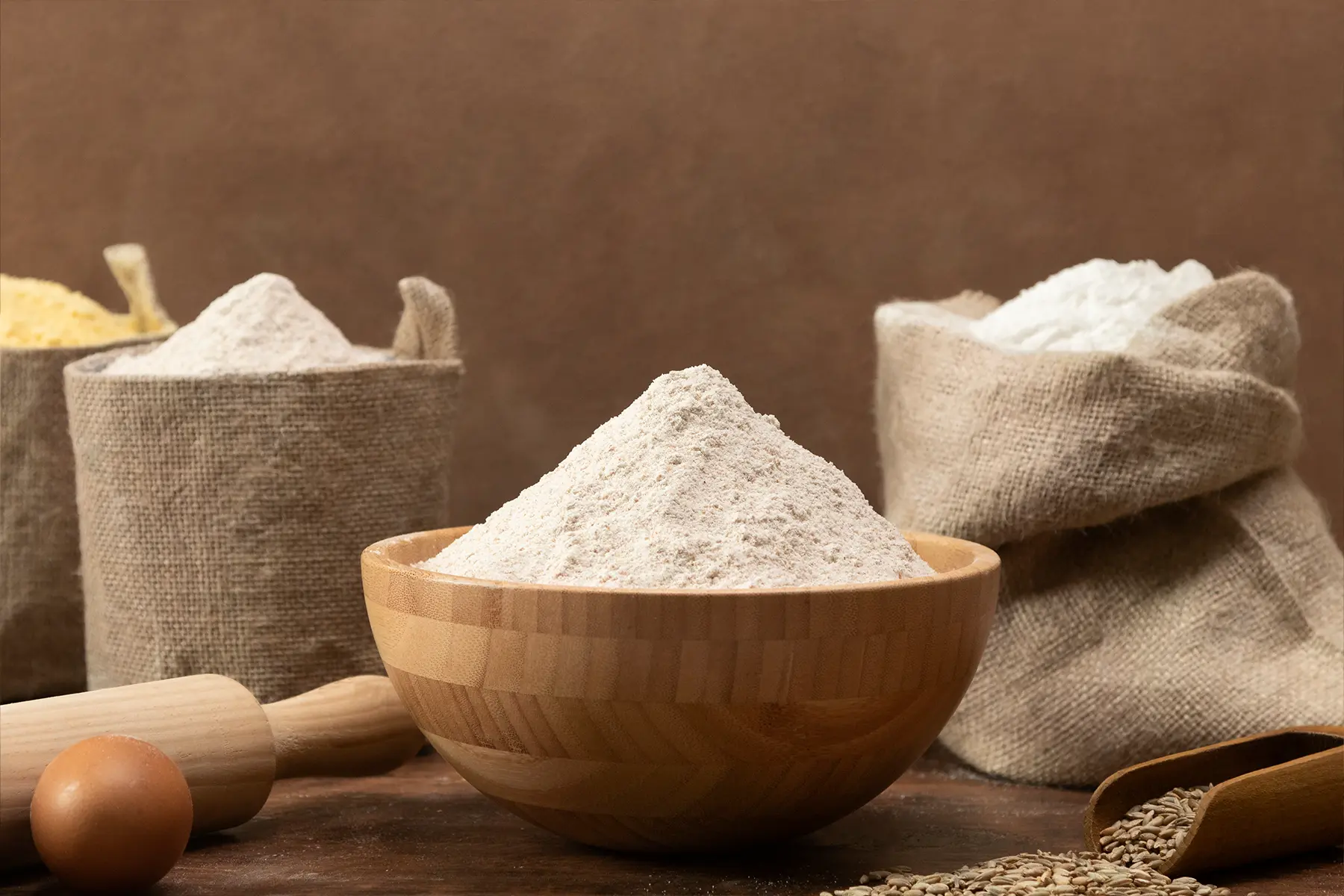
If you walk into any kitchen or grocery store today, you’ll find more flour options than ever before. From traditional chakki atta to speciality baking flours, choosing the right one can feel confusing, especially when different recipes call for different textures, protein levels and finishes. Understanding the types of wheat flour available, and how they’re best used, makes cooking and baking far more predictable and rewarding.
In India, flour plays a very central role in everyday meals, from rotis and parathas to festive bakes and global recipes. But not every type of flour in India behaves the same way. The variety of wheat, how finely it is milled and how much of the grain is retained all affect how the flour performs in your kitchen.
This guide breaks down the most common flours, explains their differences, and helps you choose the best wheat flour for what you’re making – whether it is soft chapatis, crisp bread, pizzas or tender baked goods.
Why Flour Choice Matters More Than You Think
At a glance, the flour in your kitchen might look like a simple ingredient. In reality, it’s the foundation of texture, structure and flavour in many dishes. The types of wheat flour you use determine how your dough stretches, how a loaf of bread rises and how soft or chewy the final result feels.
The two main factors that influence flour performance are:
- Protein content, which affects gluten development in dough
- The milling method, which impacts the flour’s texture and absorption
This is why recipes often specify flour types – and why using the incorrect type of flour in India can lead to dense breads, tough rotis or dry tasting cakes.
Common Types of Wheat Flour and Their Uses
Whole Wheat Flour (Atta)
Atta, made from whole wheat, is one of the most widely used types of wheat flour in Indian homes. Made by milling the entire wheat grain, it retains the bran and germ, giving it a slightly coarser texture compared to other flours and a nutty flavour.
Best for:
- Rotis and chapatis
- Parathas
- Puris
Because it absorbs more water, atta produces soft, pliable dough, ideal for various everyday flatbreads made in Indian homes. Many people consider high-quality atta to be the best wheat flour for daily cooking due to its perfect balance of nutrition and performance.
Refined Wheat Flour (Maida)
Maida is a refined wheat flour where the bran and germ are removed. It’s finer, much lighter in colour and lower in fibre than whole wheat flour.
Best for:
- Cakes and pastries
- Biscuits
- Naan and bhatura
Among the different types of wheat flour, maida creates much softer textures and lighter crumbs, making it a staple for baking, fried and festive dishes.
Bread Flour
Bread flour has a higher protein content compared to all-purpose flour, which helps create strong gluten networks within the dough. While not traditionally found in every Indian household, it’s becoming more popular as baking as a hobby grows.
Best for:
- Yeast breads
- Pizza bases
- Buns and rolls
If you’re exploring global baking styles, bread flour may feel like the best wheat flour choice for structure and chew.
All-Purpose Flour
All-purpose flour sits between maida and bread flour in terms of protein. It’s a versatile and convenient flour, especially when recipes don’t require any specialised flour.
Best for:
- Pancakes
- Cookies
- Everyday baking
For many home cooks, this remains the most adaptable and universally usable type of flour in India for mixed-use kitchens.
Speciality Wheat Flours Worth Knowing
Semolina (Sooji)
Made from durum wheat, semolina is usually coarser and slightly yellow in colour.
Best for:
- Pasta
- Upma
- Certain breads
It is key to remember that not all types of wheat flour are interchangeable, even if they come from the same grain.
European-Style Soft Wheat Flour
Soft wheat flours, often used in European baking, are very finely milled and designed for delicate doughs. They’re particularly useful for cakes, pastries and pizzas – where texture is paramount.
Programmes like Pure Flour from Europe highlight how milling traditions and wheat selection influence flour quality – especially for recipes (such as pizzas and pastas) that rely on precision and consistency.
How to Choose the Best Wheat Flour for Your Recipe
Choosing the best wheat flour isn’t about the“perfect” option – it’s about matching flour to your purpose.
Ask yourself:
- Do I need softness or structure?
- Will the dough be stretched, rolled or shaped?
- Is this for daily cooking or special baking?
For rotis, whole wheat flour remains the preferred type of flour in India. For baking, refined or speciality flours often deliver better results. Understanding the differences between types of wheat flour helps you make informed choices without trial and error.
Storage Tips for Flour at Home
Even the best wheat flour won’t perform well if it’s stored incorrectly.
- Ensure that you keep flour in airtight containers
- Store it away from heat and moisture
- Use whole wheat flour faster, as it contains natural oils
Good storage preserves flavour, freshness and performance across all types of wheat flour.
Flour and Modern Indian Cooking
Indian kitchens today are becoming more experimental than ever. From sourdough breads to homemade pizzas and fusion desserts, cooks are using multiple types of wheat flour simultaneously.
This growing curiosity is why understanding the type of flour in India – and beyond – matters. It empowers home cooks to try global recipes confidently, knowing their flour will behave as expected.
Final Thoughts: Flour as a Foundation
Flour may seem like a basic ingredient, but it is the foundation of success for countless dishes. Understanding the differences between various types of wheat flour, knowing which type of flour in India suits your recipe, and choosing the best wheat flour for the job at hand, all lead to better results in the kitchen.
Whether you’re making everyday rotis or experimenting with new bakes, the right flour turns effort into optimum enjoyment – and simple recipes into consistently good food.