Taralli

Makes
20 taralli

Preparation Time
50 minutes

Resting Time
1 hour resting + 2 hours drying

Baking Time
30 minutes
INGREDIENTS
150 ml extra virgin olive oil
100 ml white wine
100 ml water
500g Italian type 0 white flour
12g fine salt
METHOD
Put the oil, wine and water in a bowl and mix with a fork. Add the sifted flour and knead the mixture. After a couple of minutes, add the salt and mix well with your hands until you get a smooth and compact dough. Place the dough in a clean bowl sealed with cling film and leave to rest for at least an hour.
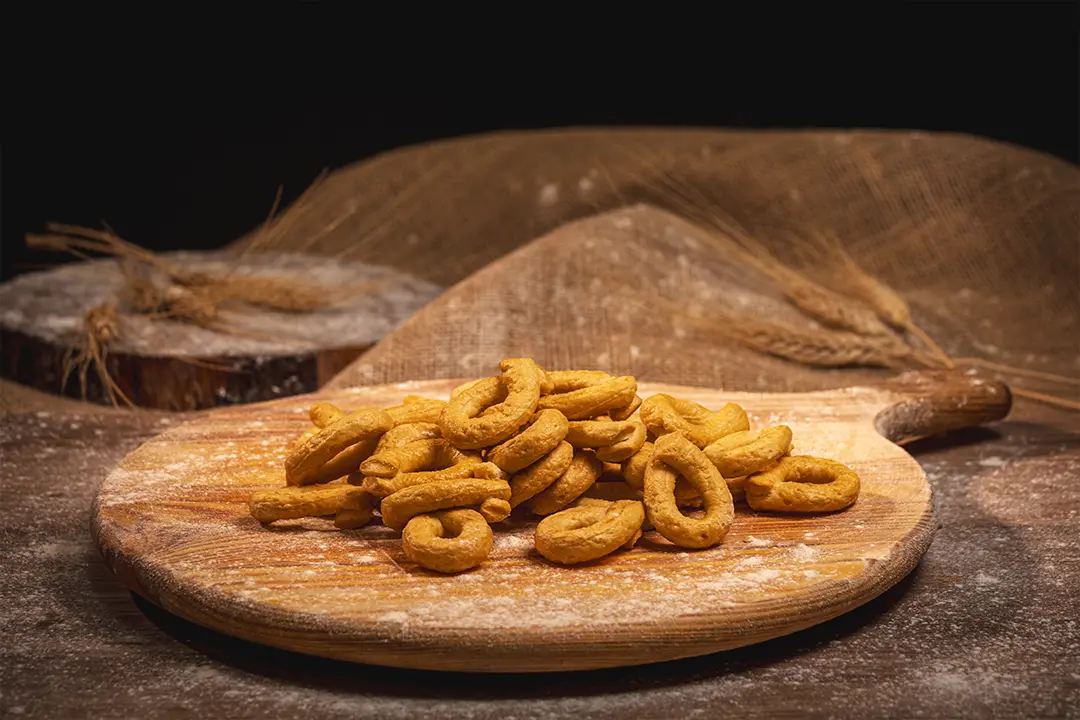
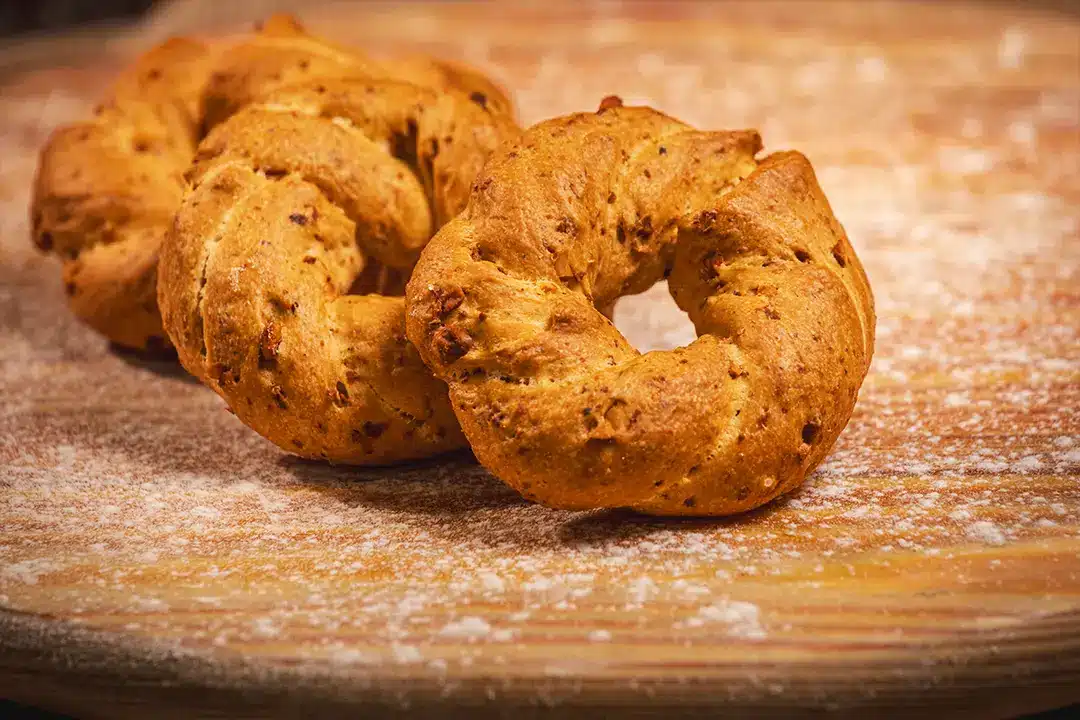
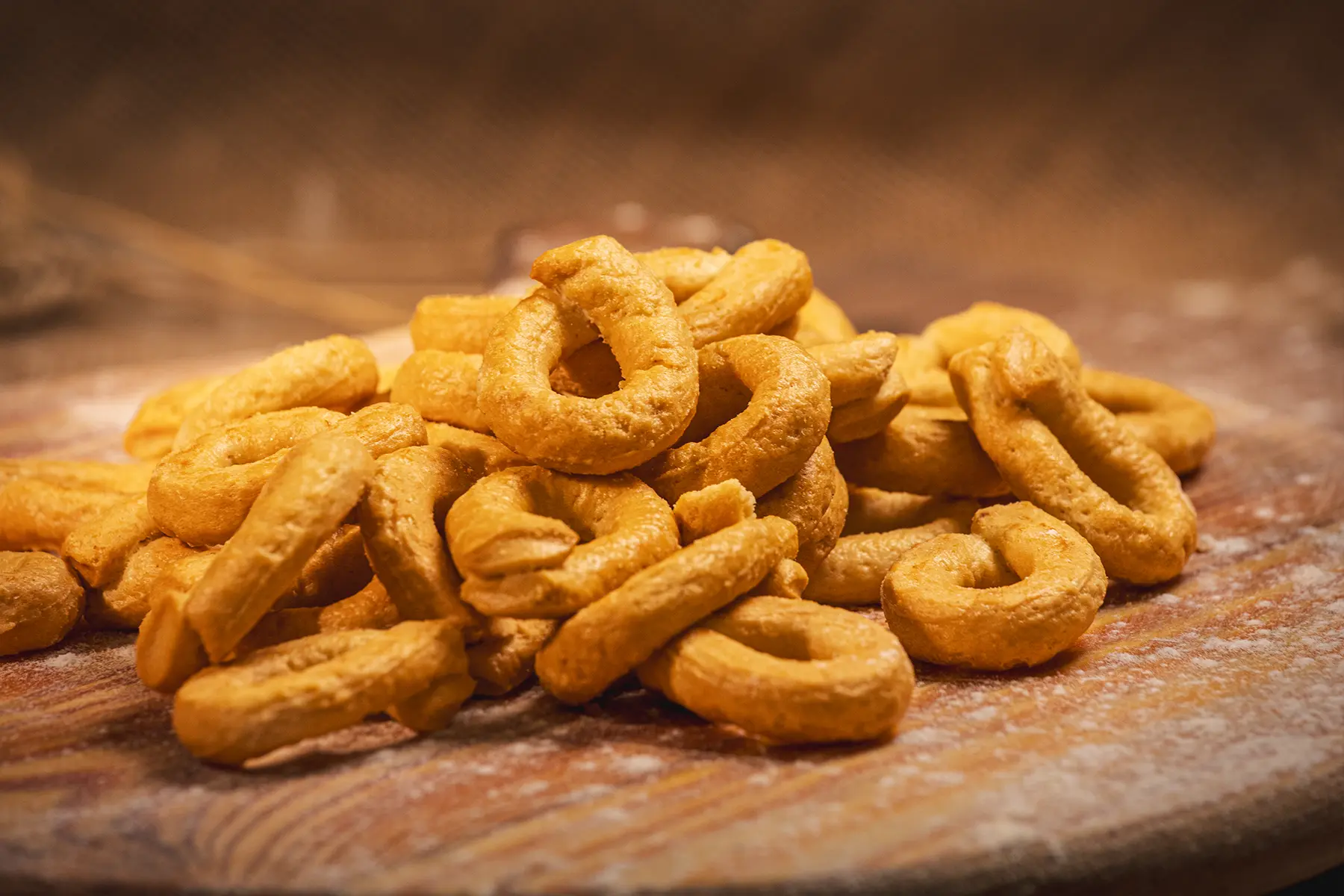
After the indicated time has elapsed, take the dough and cut it into small strips about 1-1.5 cm thick; make the typical rounded ring shape, closing each by pressing the ends together with a finger or, as tradition dictates in Puglia, with a barrel key.
If using a key, place one end of the dough strip on top of the other and press with the barrel of the key (not the bow where you hold the key) and make a small cut in the dough.
Meanwhile, bring a pot of water to a boil and cook the 4 -5 taralli at a time. As soon as they rise to the surface, drain and put them to dry on a tea towel, taking care to turn them over so that they do not stick.
Let them dry for a couple of hours and, once dry, place them on a baking tray and bake at 200°C for 30 minutes.